Fort Wayne plumbing guidance
The symptom on the surface and the pressure, drain, vent, or supply problem underneath it usually aren’t the same thing.
Fort Wayne's neighborhoods carry a century and a half of plumbing history layered on top of each other. The city's canal-era core, built up around the Wabash and Erie Canal in the 1830s and 40s, gave way to the Greek Revival and Gothic Revival homes of the West Central Historic District, built out through 1950, and later to the Tudor and Colonial Revival houses of the Forest Park Boulevard district, built mainly in 1910. Each wave of construction arrived with the supply-line and drain materials common to its own decade, and Fort Wayne's freeze-thaw winters -- the city averages roughly 30 inches of snow a year, with the ground typically frozen from mid-October to late April -- put real stress on whatever pipe happens to be in the ground.
An independent matching resource, not a licensed plumbing contractor — provider availability shifts.
Shaped by Allen County conditions
Your specific address changes the scope.
A sound diagnosis walks through how the fixtures behave, pipe material, water pressure, drainage, venting, shutoff locations, access, and prior repairs.
Plumbing permits for Fort Wayne addresses are issued through the joint Fort Wayne / Allen County Building Department. Minor repairs such as a faucet swap or clearing a clogged drain typically do not require a permit, but work that moves, adds, or modifies fixtures or supply and drain lines does. Confirm current permit and inspection requirements before scheduling plumbing work.
Review local sources →Where to start
Begin with the work in front of you.
Built to hold up
What’s hidden later needs attention now.
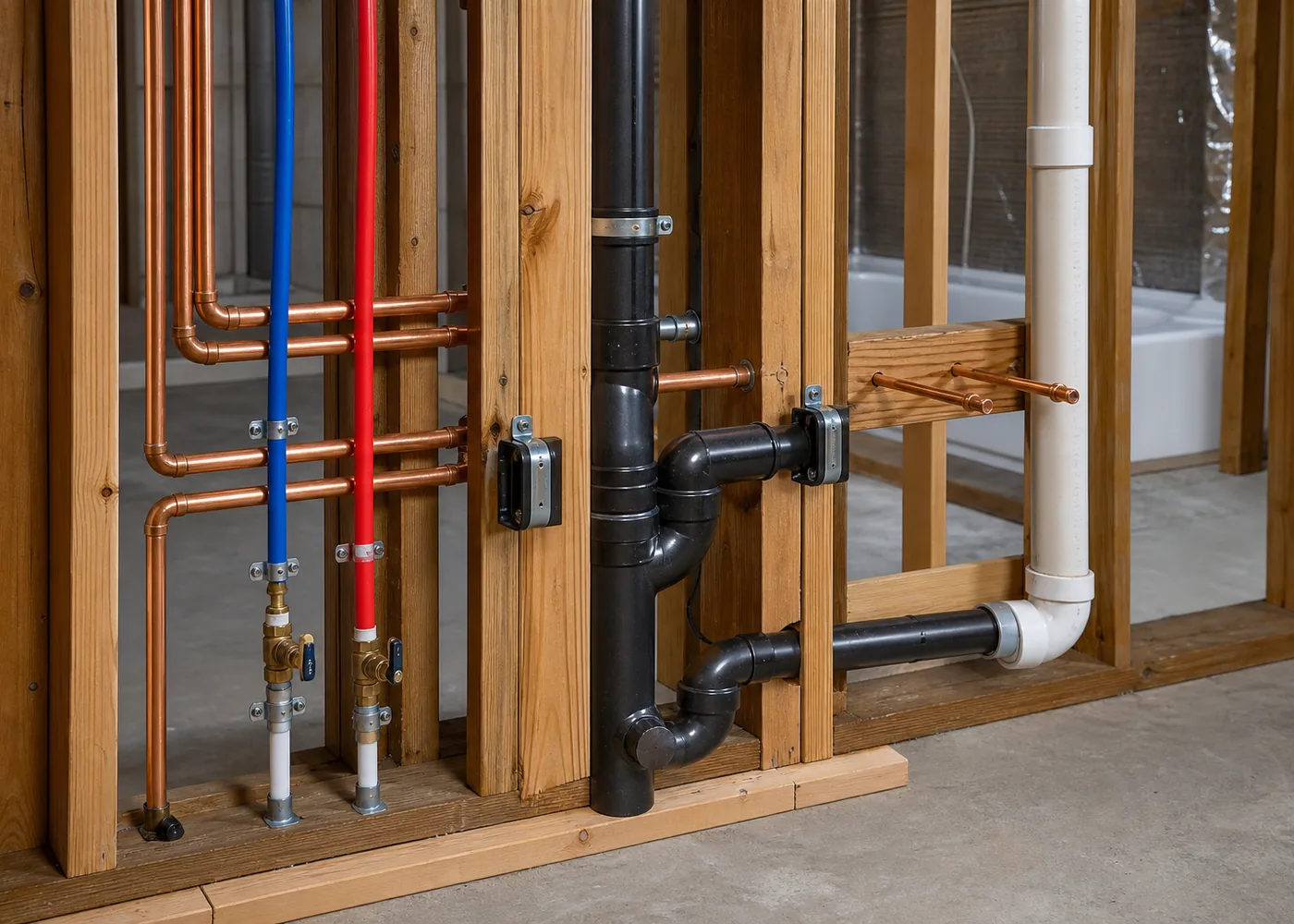
The parts nobody sees again — venting, supports, shutoff placement, pipe material, drainage pitch — matter more than the finish that goes back over them.
See a sensible project process →Local housing context
“Fort Wayne sits at the confluence of the St. Marys, St. Joseph, and Maumee Rivers, on ground that was once Kekionga, capital of the Miami people. General Anthony Wayne built the fort that gave the city its name in 1794, on roughly the site of an earlier French post, Fort Miami, built in 1722. The Wabash and Erie Canal reached Fort Wayne in the early 1830s and opened through the city in 1843; because the city sat at the canal's highest elevation point, Fort Wayne became known as the 'Summit City.'”
Planning-level cost context
Compare scopes—not just totals.
Access difficulty, existing damage, material choice, permits, testing, hauling debris, restoring finishes, and whatever’s concealed until the wall opens — each one can move a quote.
Tell us what’s going on
A little detail makes the first call worthwhile.
What you send here may be passed to an independent provider working in or near Fort Wayne.
Common questions
A clearer starting point.
Would you be the plumber showing up?
No — we’re a matching service. The provider who calls is independent and local, not us.
Is someone guaranteed to take the job?
No. Coverage depends on provider availability — confirm their credentials and scope once you’re connected.
Can I get a firm price sight unseen?
No. A responsible number depends on the house, the site, access, and the actual scope requested.